

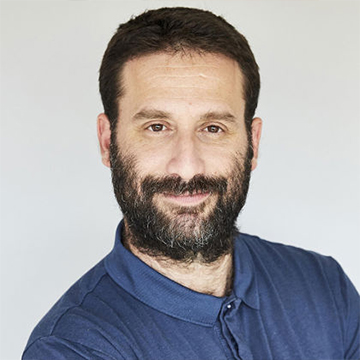
אודות
פרופ' זוהר אליוסף הוא חבר סגל בביה"ס לטיפול, ייעוץ והתפתחות האדם בפקולטה לחינוך, וזוכה מלגת אלון לקליטת חוקרים מצטיינים. תוכנית המחקר שלו עוסקת באינטגרציה של בינה מלאכותית יוצרת (GenAI) בריאות הנפש, חינוך ורפאואה תוך שילוב בין מחקר אמפירי תאורטי ופיתוח טכנולוגי.
עבודתו היישומית מתמקדת בפיתוח ארכיטקטורות של סימולטורים קליניים מבוססי AI ומערכות הכשרה. פיתוחים אלו נועדו לאפשר אימון סקיילבילי של אנשי מקצוע ושומרי סף במיומנויות תקשורת מורכבות, כמו הערכת סיכון ומניעת אובדנות, ומיומנויות מסירת בשורה מרה, ופיתוח מנטליזציה.
במקביל לפיתוח היישומי, ד"ר אליוסף חוקר את היכולות הקליניות והרגשיות של מודלי שפה גדולים (LLMs) ואת ההטיות (Biases) המוטמעות בהם. מחקרו מציע מסגרות אתיות-פילוסופיות להבנת הדינמיקה החדשה במרחב הטיפולי חינוכי.
פרסומים
Published Publication
Z. Elyoseph., M. Mintz., E. Vakil., R. Zaltzman., CR. Gordon. (2020). Selective procedural memory impairment but preserved declarative memory in Spinocerebellar Ataxia Type 3. The Cerebellum. 19(2), 226- 234
JCR IF 2020= 3.847
R 2020= Neurosciences 126/273 Q2
I. Levkovich., Z. Elyoseph. (2020). College students with ADHD and their reasons for becoming teachers despite negative childhood experiences: Asia-Pacific Journal of Teacher Education. 49(4), 387-402
JCR IF 2020= 1.645
SJR 2020= 1.028
R 2020= Education 198/1692 Q1
R. Zaltzman., Z. Elyoseph., N. Lev., CR. Gordon. (2020). Trehalose in Machado-Joseph Disease: Safety, tolerability, and efficacy. The Cerebellum. 19(5), 672-679
JCR IF 2020= 3.847
R 2020= Neurosciences 126/273 Q2
*D. Geisinger., *Z. Elyoseph., R. Zaltzman., M. Mintz., CR. Gordon. (2021). Angular vestibulo ocular reflex loss with preserved saccular function in Machado-Joseph Disease. Journal of Neurological Sciences. 424, 117393. (5 pages)
JCR IF 2021= 4.553
R 2021= Clinical Neurology 71/212 Q2; Neurosciences 104/275 Q2
I. Levkovich., Z. Elyoseph. (2021). "I don’t know what to say and I’m afraid of making matters worse": Teachers' perspectives on providing support to bereaved students after the death of a parent. OMEGA - Journal of Death and Dying. 86(3), 945–965
JCR IF 2021= 2.602
R 2021= Psychology, Multidisciplinary 70/148 Q2
D. Geisinger., K. Engelberg., H. Suarez., Z. Elyoseph and CR. Gordon., AZ. Zivotofsky. (2022). Faster velocity perception with slower optokinetic nystagmus: a paradoxical perception in virtual reality. Journal of Neurological Sciences. 441, 120384. (5 pages)
JCR IF 2022= 4.4
R 2022= Clinical Neurology 57/212 Q2; Neurosciences 91/272 Q2
Z. Elyoseph., D. Geisinger., M. Mintz., C.R. Gordon. (2023). How vestibular dysfunction transforms into symptoms of depersonalization and derealization? Journal of the Neurological Sciences. 444, 120530. (5 Pages)
JCR IF 2023= 3.6
R 2023= Clinical Neurology 66/277 Q1; Neurosciences 103/310 Q2
Z. Elyoseph., D. Geisinger., Erez Nave-Aival, C.R. Gordon. (2022). "I don’t know how you feel and how I feel about that": Mentalizing impairments in Machado Joseph Disease. The Cerebellum. 1-8
JCR IF 2022= 3.5
R 2022= Neurosciences 127/272 Q2
Z. Elyoseph., D. Geisinger., M. Mintz., C.R. Gordon. (2023). The overreaching effects of vestibular deficit: Imbalance, anxiety, and spatial disorientation. Journal of the Neurological Sciences. 451, 120723. (9 Pages)
JCR IF 2023= 3.6
R 2023= Clinical Neurology 66/277 Q1; Neurosciences 103/310 Q2
*Z. Elyoseph., *D. Geisinger., M. Mintz., C.R. Gordon. (2023). Vestibular deficit in pre-symptomatic and symptomatic patients with Machado-Joseph disease: A reliable biomarker of neurodegeneration. The Cerebellum. 1-7
JCR IF 2022= 3.5
R 2022= Neurosciences 127/272 Q2
*Z. Elyoseph., *D. Hadar-Shoval., K. Asraf##., & M, Lvovsky#. (2023). ChatGPT outperforms humans in emotional awareness evaluations. Frontiers in Psychology, 14, 1199058. (7 Pages)
JCR IF 2022= 3.8
R 2022= Psychology, Multidisciplinary 34/147 Q1
*Z. Elyoseph., *I. Levkovich. (2023). Beyond Human Expertise: The Promise and Limitations of ChatGPT in Suicide Risk Assessment. Frontiers in Psychiatry. 14, 1213141. (7 Pages)
JCR IF 2022= 4.7
R 2022= Psychiatry 40/144 Q2; Psychiatry 53/155 Q2
Z. Elyoseph., D. Geisinger., R. Zaltzman., M. Mintz., C.R. Gordon. (2023). The vestibular symptomatology of Machado-Joseph Disease. Journal of Vestibular Research. 34(2-3):159-167
JCR IF 2022= 2.3
R 2022=Otorhinolaryngology 19/43 Q2
*I. Levkovich.,*Z. Elyoseph. (2023). Identifying Depression and Its Determinants Upon Initiating Treatment: ChatGPT versus Primary Care Physicians. Family Medicine and Community Health Journal. 11(4). (9 Pages)
JCR IF 2022= 6.1
R 2022= N/A
SJR 2022= 1.286
R 2022= Family Practice 4/51 Q1; Public Health, Environmental and Occupational Health 86/611 Q1
*D. Hadar-Shoval., *Z. Elyoseph., & , M, Lvovsky#. (2023). The Plasticity of ChatGPT’s Mentalizing abilities: Personalization for Personality Structures. Frontiers in Psychiatry. 14, 1234397. (7 Pages)
JCR IF 2022= 4.7
R 2022= Psychiatry 40/144 Q2; Psychiatry 53/155 Q2
A. Tal., Z. Elyoseph., Y. Haber##., T. Angert.,T. Gur., T. Simon., A. Asman. (2023). The artificial third: Utilizing ChatGPT in mental health. The American Journal of Bioethics. 23(10), 74-77
JCR IF 2022= 13.4
R 2022= Ethics 1/57 Q1; Medical Ethics 1/16 Q1; Social Issues 1/44 Q1; Social Sciences, Biomedical 1/45 Q1
I. Levkovich., Z. Elyoseph. (2023). Suicide risk assessments through the eyes of ChatGPT- 3.5 versus ChatGPT-4: vignette study. JMIR Mental Health. 10, e51232. (11 Pages)
JCR IF 2023= 4.8
R 2023= Psychiatry 39/276 Q1
Y. Richter., CR. Gordon., G. Vainstein., C. Bublil-Mor, D. Geisinger., N. Meital
Kfir., Z. Elyoseph. (2023). The efficacy and safety of novel glasses using peripheral visual stimulation: A pilot study in adult ADHD. Frontiers in Psychiatry. 14, 1280440. (8 Pages)
JCR IF 2022= 4.7
R 2022= Psychiatry 40/144 Q2; Psychiatry 53/155 Q2
Z. Elyoseph., Y. Shimoni., Y. Levi-BelzI., Levkovich. (2024). Exploring Post-Traumatic Growth among Young Adults Coping with Parental Loss: The Role of Resilience and of Willingness to Seek Psychological Help. OMEGA - Journal of Death and Dying. 0(0). 1-18
JCR IF 2022= 2.0
R 2022= Psychology, Multidisciplinary 86/148 q3; Social Sciences, Biomedical 26/45 Q3
SJR 2022= 0.480
R 2022= Critical Care and Intensive Care Medicine 43/108 Q2; Health (Social Science) 145/337 Q2; Life-Span and Life-Course Studies 34/56 Q3
Z. Elyoseph., I. Levkovich. (2024). Beyond the Surface: Teachers’ Perceptions and Experiences in Cases of Non-Suicidal Self-Injury among High School Students. OMEGA - Journal of Death and Dying. 0(0). 1-16
JCR IF 2022= 2.0
R 2022= Psychology, Multidisciplinary 86/148 Q3; Social Sciences, Biomedical 26/45 Q3
SJR 2022= 0.480
R 2022= Critical Care and Intensive Care Medicine 43/108 Q2; Health (Social Science) 145/337 Q2; Life-Span and Life-Course Studies 34/56 Q3
Z. Elyoseph., E Refuae##., M, Lvovsky#., K. Asaraf##., Y. Shimony., D. Hadar-Shoval.(2024). Capacity of Generative AI to Interpret Human Emotions From Visual and Textual Data: Pilot Evaluation Study. JMIR Mental Health. ;11:e54369. (9 Pages)
JCR IF 2023= 4.8
R 2023= Psychiatry 39/276 Q1
Z. Elyoseph., I. Levkovich., S. Altman. (2024). Assessing Prognosis in Depression: Comparing Perspectives of AI Models, Mental Health Professionals, and the General Public. Family Medicine and Community Health Journal. 12(Suppl 1), e002583. (9 Pages)
JCR IF 2022= 6.1
R 2022= N/A
SJR 2022= 1.286
R 2022= Family Practice 4/51 Q1; Public Health, Environmental and Occupational Health 86/611 Q1
D. Hadar-Shoval., K, Asraf##., Y. Haber##., Y. Mizrachi., Z. Elyoseph (2024). Assessing the Alignment of Large Language Models With Human Values for Mental Health Integration: Cross-Sectional Study Using Schwartz’s Theory of Basic Values. JMIR Mental Health. 2024;11:e55988. (15 Pages)
JCR IF 2023= 4.8
R 2023= Psychiatry 39/276 Q1
Z. Elyoseph., I. Levkovich., D. Hadar-Shoval (2024). Beyond Personhood: Ethical Paradigms in the Generative Artificial Intelligence Era. The American Journal of Bioethics. 24(1), 57-59 JCR IF 2022= 13.4
R 2022= Ethics 1/57 Q1; Medical Ethics 1/16 Q1; Social Issues 1/44 Q1; Social Sciences, Biomedical 1/45 Q1
Elyoseph Z., Gur T##, Haber Y##., Simon T., Angert T., Navon Y##., Tal A, Asman O. (2024). An Ethical Perspective on The Democratization of Mental Health with Generative Artificial Intelligence. JMIR Mental Health. (9 Pages)
JCR IF 2023= 4.8
R 2023= Psychiatry 39/276 Q1
Z. Elyoseph., D. Hadar-Shoval., T. Angert., N. Yitshaki., E. Hol##., O. Asman., I. Levkovich. (2024). Silent Warriors: Mental Health Volunteers in the October 7 Gaza Border Crisis in Israel. The Lancet Psychiatry. 11(1), 10-12
JCR IF 2023= 30.8
R 2023= Psychiatry 2/276 Q1
Z. Elyoseph., I. Levkovich. (2024). Comparing the Perspectives of Generative AI, Mental Health Experts, and the General Public on Schizophrenia Recovery: Case Vignette Study. JMIR Mental Health. 11, e53043. (13 Pages)
JCR IF 2023= 4.8
R 2023= Psychiatry 39/276 Q1
C.R. Gordon., R. Zaltzman., D. Geisinger., Z. Elyoseph., Y. Gimon. (2024). Bilateral Vestibulopathy as the Initial Presentation of CANVAS. Journal of the Neurological Sciences. 460, 122990. (4 Pages)
JCR IF 2023= 3.6
R 2023= Clinical Neurology 66/277 Q1; Neurosciences 103/310 Q2
D. Geisinger., Z. Elyoseph., R. Zaltzman., M. Mintz., CR. Gordon. (2024). Functional impact of Bilateral Vestibular Loss and the unexplained complaint of oscillopsia. Frontiers in Neurology. 15, 1365369. (11 Pages)
JCR IF 2022= 3.4
R 2022= Clinical Neurology 91/212 Q2; Neurosciences 136/272 Q2
Y. Haber##., D. Hadar-Shoval., I. Levkovich., Z. Elyoseph (2024). The artificial third - a broad view of the effects of artificial intelligence on the field of mental health. JMIR Mental Health. 11, e54781. (9 Pages)
JCR IF 2023= 4.8
R 2023= Psychiatry 39/276 Q1
S. Altman., Z. Elyoseph., I. Levkovich. (2024). The Impact of Depression and Access to Weapons on Suicide Risk Assessment: A Comparison of ChatGPT-3.5 and ChatGPT-4. Peerj. 12, e17468. (16 Pages)
JCR IF 2022= 2.7
R 2022= Multidisciplinary Sciences 36/73 Q2
T. Gur Hartman., R. Tarrasch., A. Zerem; R. Sokol-Novinsky., Z. Elyoseph., T. Lerman- Sagie; M. Mintz. (2024). Lost in the Vestibular Network: Consequences of Vestibular Hypofunction in Children with ADHD. European Journal of Pediatric Neurology. (9 Pages)
JCR IF 2022= 3.1
R 2022= Clinical Neurology 107/212 Q3; Pediatrics 37/130 Q2
S. Altman., Z. Elyoseph., I. Levkovich. (2023). Integrating Previous Suicide Attempts, Gender, and Age into Suicide Risk Assessment Using Advanced Artificial Intelligence Models. Journal of Clinical Psychiatry.85(4). (9 Pages)
JCR IF 2023= 4.5
R 2023= Psychiatry 45/276 Q1
34. S. Awwad-Tabry., I. Levkovich., Z. Elyoseph. (2024). Breaking Bad News: A Case
Study of Social Workers Communicating Bereavement and Distressing News in
the Aftermath of Hamas Attack in Israel. Psychology (PsyCh)
Ranking in process
35. Levkovich., S. Altman., Z. Elyoseph. (2024) Every day is like hell": Civilian abductees released from captivity in Gaza. Journal of Loss and Trauma. 1-21
JCR IF 2022= 4.7
R-2022= Psychology, Social 13/63 Q1
36. S. Altman., Levkovich., Z. Elyoseph., (2024). Artificial Intelligence Models Across Cultures: Suicide Risk Assessment Predictions in Greece and South Korea. Journal of Cultural Cognitive Science, 8, 275 – 287
JCR IF 2023= 1.3
R 2023= Psychology, Experimental 82/99 Q4
SJR 2023= 0.527
R 2023= Linguistics and Language 195/1266 Q1
37. D. Hadar-Shoval., S. Altman., Elyoseph., I. Levkovich. (2024). Embedded values-like shape ethical reasoning of large language models on primary care ethical dilemmas. Heliyon - Cell Press. 10 (18), 1-16.
JCR IF 2023= 3.4
R 2023= Multidisciplinary Sciences 28/134 Q1
38. Levkovich., E. Rabin., M. Baran., Z. Elyoseph. (2024). Large Language Models vs Physicians: Detecting Childhood Anxiety with Comorbidities. Digital Health
JCR IF 2023= 2.9
R 2023= Public, Environmental & Occupational Health 128/403 Q2
39. D. Hadar-Shoval., Y. Haber., T. Simon., Tal., T. Elyoseph., Elyoseph. (2025). Transforming Perceptions: Exploring the Multifaceted Potential of Generative AI for People with Cognitive Disabilities. JMIR Neurotechnology
Ranking in process
40. M, Choudhury., Elyoseph $., N. Fast., O. Ong., E. Nsoesie., E. Pavlick. (2025). The promise and pitfalls of generative AI for psychology. Nature Reviews Psychology.
$alphabetical order
JCR IF 2024= 16.8
R2023= Psychology, Multidisciplinary 4/219 Q1
41. D. Hadar-Shoval., M. Lvovsky#., K. Asraf##., Y. Shimoni., Elyoseph. (2025). Exploring the Potential of Large Language Models in Verbal Intelligence Assessment: A Preliminary Investigation. JMIR Formative Research
JCR IF 2023= 2.0
R2023= Health care sciences & services Q3
SJR 2023: Medicine (miscellaneous) Q2
42. Y. Haber##., K. Gigi., I. Tsafrir., I. Levkovich., D. Hadar-Shoval., Elyoseph. (2024). The Externalization of Internal Experiences in Psychotherapy through Generative Artificial Intelligence: A Theoretical, Ethical and clinical analysis. Frontiers in Digital Health
JCR 2023= 2.9
R 2023= Health Care Sciences & Services 42/174, Q1; Medical Informatics 20/44 Q2
43. I. Levkovich., R. Hussein-Farraj., E. Rabin., Elyoseph. (2024). Attributional Patterns Toward Students with and without Learning Disabilities: Artificial Intelligence Models vs. Trainee Teachers. Research in Developmental Disabilities
JCR 2023=29
R2023= Education, Special 1/62, Q1, Rehabilitation 4/170, Q1
44. *Z. Elyoseph., *B. Nobile., I, Levkovich., R. Chancel., Y. P. Courtet., Y. Levi-Belz. (2025). The Role of Generative Artificial Intelligence’s in Evaluating Adherence to Responsible Press Media Reports on Suicide: A Multi-Site, Three Language Study. European Psychiatry
JCR 2023=7.2
R2023= Psychiatry, Q1, 15/279
45. D. Hadar-Shoval., H. Yuval., A. Ytzhaki., K. Gigi., Elyoseph. (2025). Conformity in Large Language Models and Their Impact on Medicine. BMC Psychiatry
JCR 2023= 3.2
R 2024= Psychiatry 79/279 Q1
46. I. Levkovich., Y. Levi-Belz., Y. Haber##., Elyoseph. (2025). A step toward the future? Using GenAI Simulator in QPR Suicide Prevention Training for Gatekeepers. Frontiers in Medicine
JCR 2023= 3.1
R 2023= Medicine, General & Internal 57/329 Q1
47. Ophir., R. Tikochinski., Z. Elyoseph., Y. Efrati., H. Rosenberg., (2025). Balancing Promise and Concern in AI Therapy: A Critical Perspective on Early Evidence from the MIT-OpenAI RCT. Frontiers in Medicine
JCR 2023= 3.1
R 2023= Medicine, General & Internal 57/329 Q1
48. *E. Refoua., *Z. Elyoseph., R. Wacker., I. Dziobek., Y. Tzafrir., G. Meinlschmidt. (2024). The Next Frontier in Mindreading? Assessing Generative Artificial Intelligence (GAI)’s Social-Cognitive Capabilities using Dynamic Audiovisual Stimuli. Computers in Human Behavior Reports
JCR 2023= 4.9
R 2023= Psychology Experimental 5/99, Q1
49. Elyoseph., I. Levkovich., Y. Levi-Belz., Y. Haber##. (2025). Using GenAI to train mental health professionals in suicide risk assessment: Preliminary findings. The Journal of Clinical Psychiatry
JCR 2023= 4.5
R 2023= Psychiatry 45/276 Q1
50. Elyoseph., I. Levkovich., E. Rabin., G. Shemo#., T. Szpiler#., D. Hadar-Shoval., Y. Levi- Belz. (2025). Applying Language Models for Suicide Prevention: Evaluating News Article Adherence to WHO Reporting Guidelines. npj Mental Health Research
Ranking in process
51. Novis-Deutsch,, T. Elyoseph., Z. Elyoseph. (2025). How Much of a Pluralist is Chat GPT? A Comparative Study of Value Pluralism in Generative AI Chatbots. AI & Society
JCR 2024= 4.7 R2024= Computer Science, Artificial Intelligence 58/204 (Q2)
SJR: Artificial Intelligence (Q1)
52. Levkovich., S. Altman., Z. Elyoseph. (2024). Coping strategies during captivity: a qualitative study on released civilian abductees in Gaza. BMC Psychology
JCR IF 2022= 2.7
R 2023= Psychology, Multidisciplinary 52/218 Q1
53. I. Levkovich,, Elyoseph., L. Lauderdale., G. Meinlschmidt., N. Bénédicte., D. Hadar Shoval., Y. Levi-Belz., S. Shinan-Altman., J.P. Grodniewicz (2025). Editorial: Empowering Suicide Prevention Efforts with Generative Artificial Intelligence (AI) Technology. Frontiers in Psychiatry
JCR 2024= 3.2 R2024= Psychiatry 91/288 (Q2)
SJR: Psychiatry and Mental Health (Q1)
54. J, Thomas., Z. Elyoseph., G, Meinlschmid., R, Lieb. (Accepted). Large Language Models in Automated Suicide Risk Factor Monitoring: A Comparative Study of AI and Human Ratings Using LLM-Based Chat Agents on an Observational Suicide Scale. Scientific reports
55. Sloin., E. Vakil., Z. Elyoseph (2025). Factor Analyses Across Life Span: Based on Composite Scores Derived from the Rey – Auditory Verbal Learning Test (AVLT). Journal of Clinical and Experimental Neuropsychology
JCR 2023= 1.8
R 2023= Psychology 50/92 Q3
56. Blumkin, L., Hauptman, A., Ravid, S., Elyoseph, Z., Shimoni, Y., Ash, S., ... & Gur-Hartman, T. (2025). Motor, cognitive, affective, and communication outcomes in patients with sustained remission of opsoclonus-myoclonus-ataxia syndrome. European Journal of Paediatric Neurology
57. Haber, Y., Levkovich, I., Tzafrir, I., Gigi, K., Yinon, D., Shoval, D. H., & Elyoseph, Z. (2025). CanvasHero: The role of artificial intelligence in cultivating resilience among children and youth using the 6-part story method in mass war trauma. Computers in Human Behavior: Artificial Humans, 100196
58. Cohan. M. Elyoseph Z. (Accepted). An Innovative Simulator for Practicing Ethical Dilemmas on the Boundaries of Confidentiality in Social Work. Journal of the Society for Social Work and Research
JCR 2024= 2.0
R 2023= social work 11/94 Q1
59. Kariv, D., Haber, Y., Attar, I., Elyoseph, Z. (Accepted). AI-Simulated Entrepreneurship under uncertainty: Forecasting University-Driven Capability Evolution. The Journal of Technology Transfer
JCR 2024= 4.2
JCR (Q2), SJR (Q1)
השכלה
תחומי מחקר
פרסים
זוכה מלגת אלון למדענים צעירים מצטיינים.
החוקר בעל מספר הפרסומים הרב ביותר בסגל האקדמי- מכללת עמק יזרעאל 2024